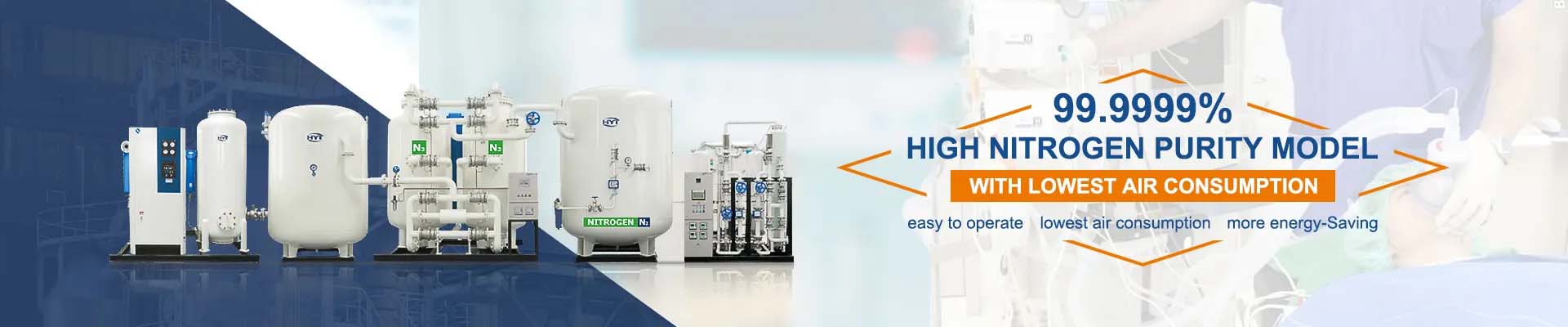
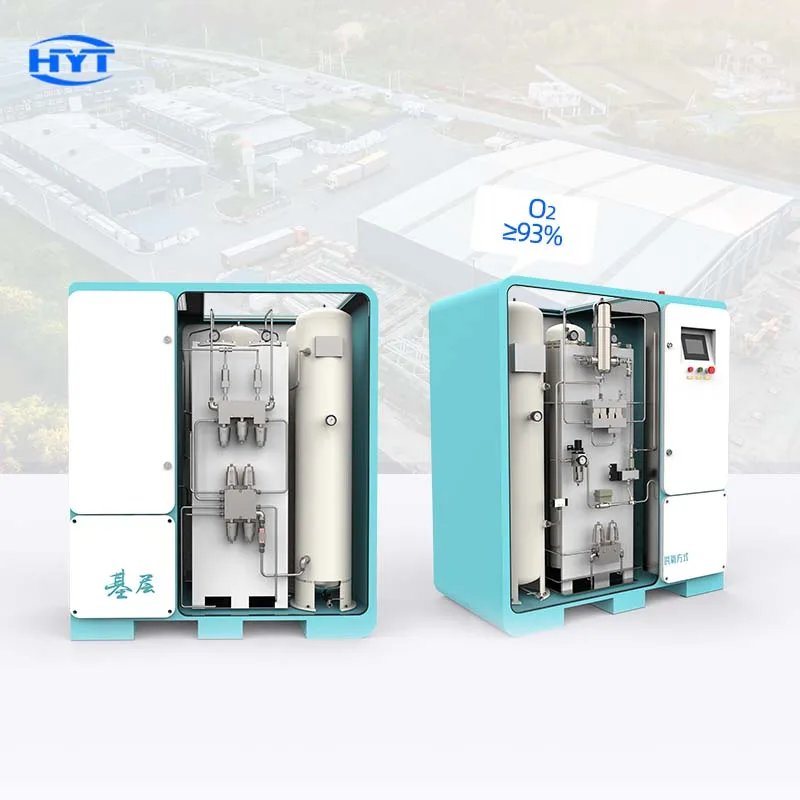
Despite similar exteriors and shared PSA technology, the two systems use different molecular sieves, pressures, purities and applications—and should never be treated as interchangeable.
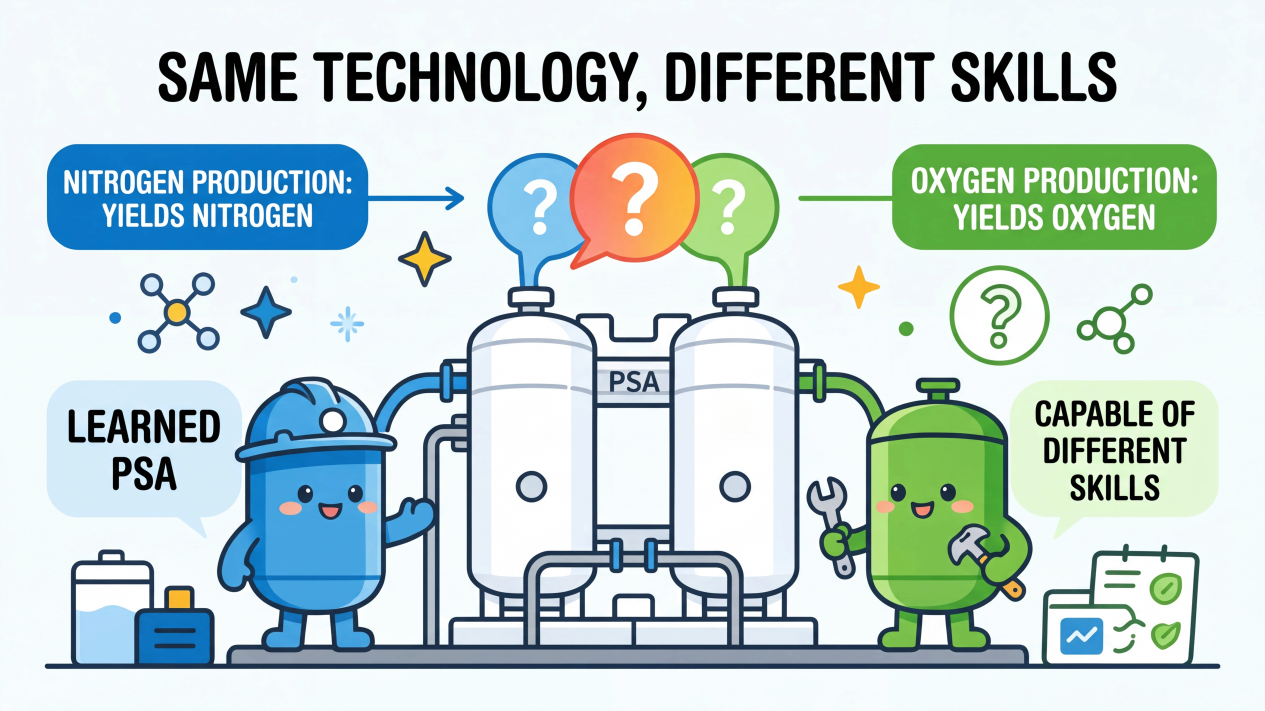
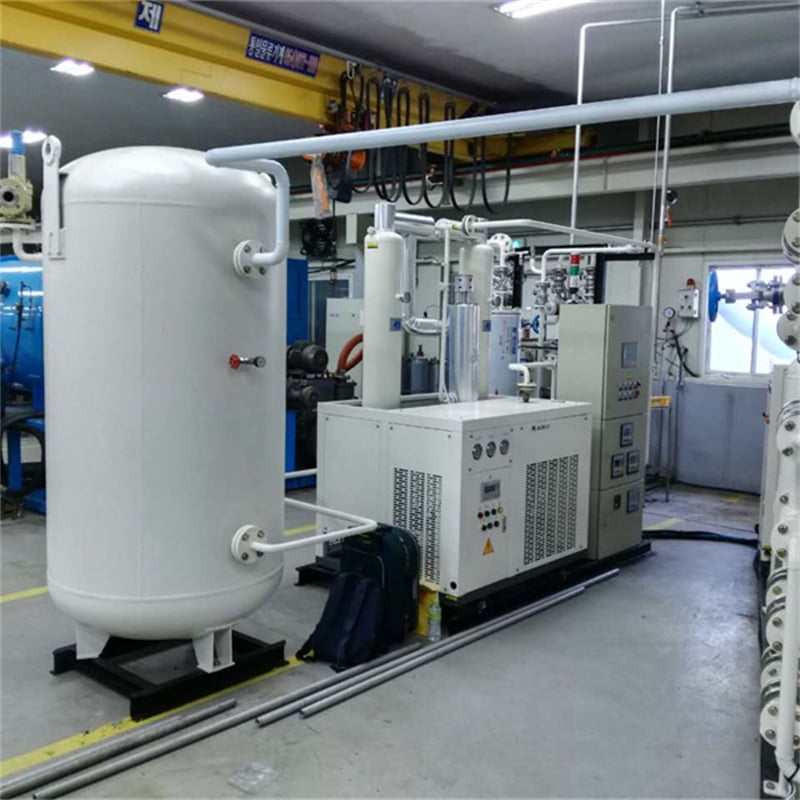
In industrial gas generation, PSA nitrogen generators and PSA oxygen generators often appear almost identical. Both use Pressure Swing Adsorption (PSA) technology, feature dual adsorption towers, and run on compressed air. However, industry experts say they are not interchangeable. Their internal adsorbents, separation mechanisms, output purity and real-world applications are fundamentally different.
Different Molecular Sieves, Different Separation Logic
PSA nitrogen generators use Carbon Molecular Sieve (CMS) and rely on kinetic separation. At room temperature, oxygen molecules diffuse roughly 30 times faster than nitrogen molecules. Under pressure, oxygen is quickly trapped inside CMS pores, while slower-moving nitrogen passes through as the product gas. When the tower becomes saturated, it depressurizes to release adsorbed oxygen for regeneration.
PSA oxygen generators use Zeolite Molecular Sieve and rely on equilibrium adsorption. Nitrogen molecules have a strong quadrupole moment and interact strongly with cations inside the zeolite, so nitrogen is preferentially captured. Oxygen molecules show weaker polarity interactions and flow out as product oxygen.
Simply swapping molecular sieves cannot convert one machine into the other. Pipeline design, working pressure, valve timing and control logic are custom-designed for each adsorbent. Forced retrofitting can cause severe performance failure.
Same Feed Air, Different Purity and Pressure
Both machines use compressed air as raw material, but their output specifications differ sharply.
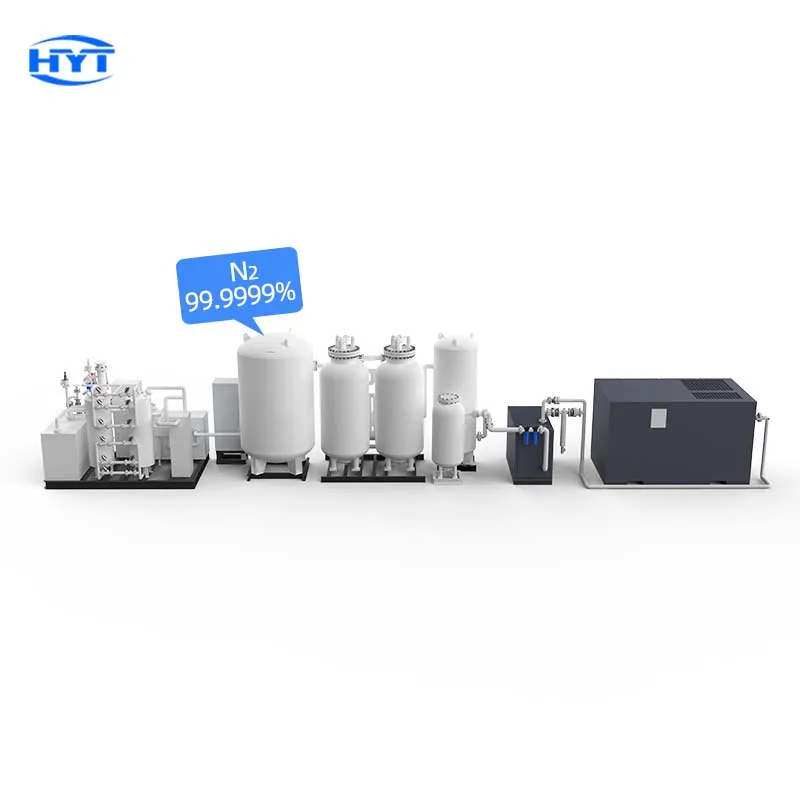
PSA nitrogen generators typically operate at 0.7–0.8 MPa and can produce nitrogen with purity from 95% to 99.9995%. Adsorption cycle time can be adjusted to tune purity. Electronics manufacturing often requires 99.99%–99.999% high-purity nitrogen, while food preservation usually needs 98%–99.9%.
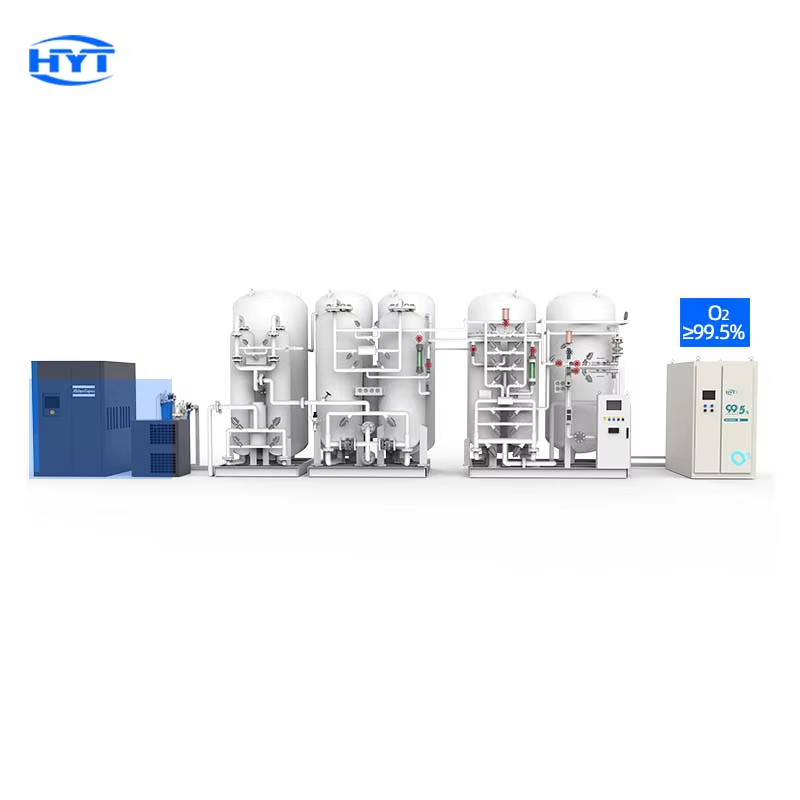
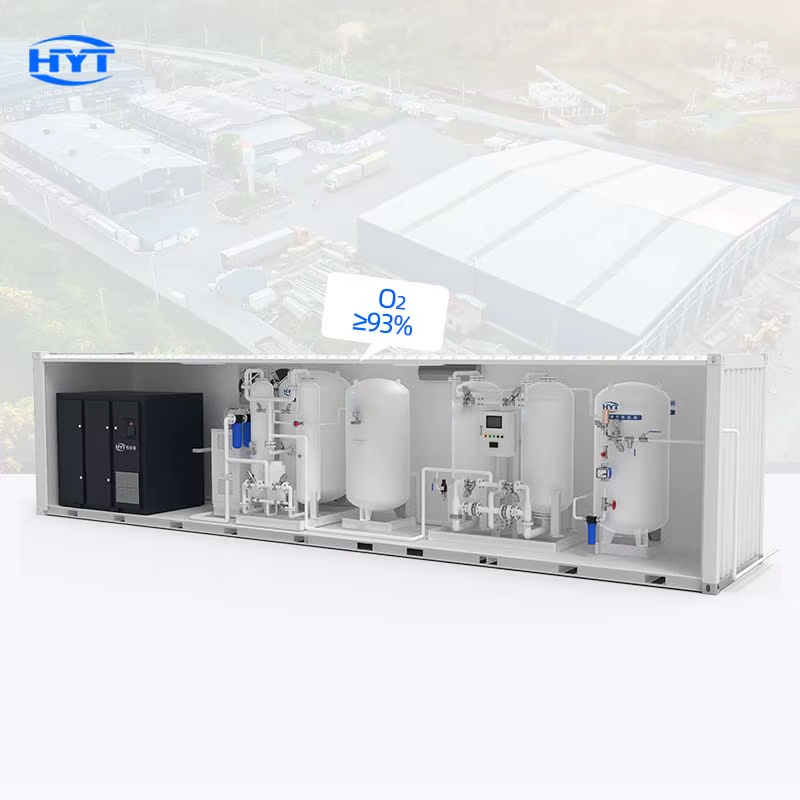
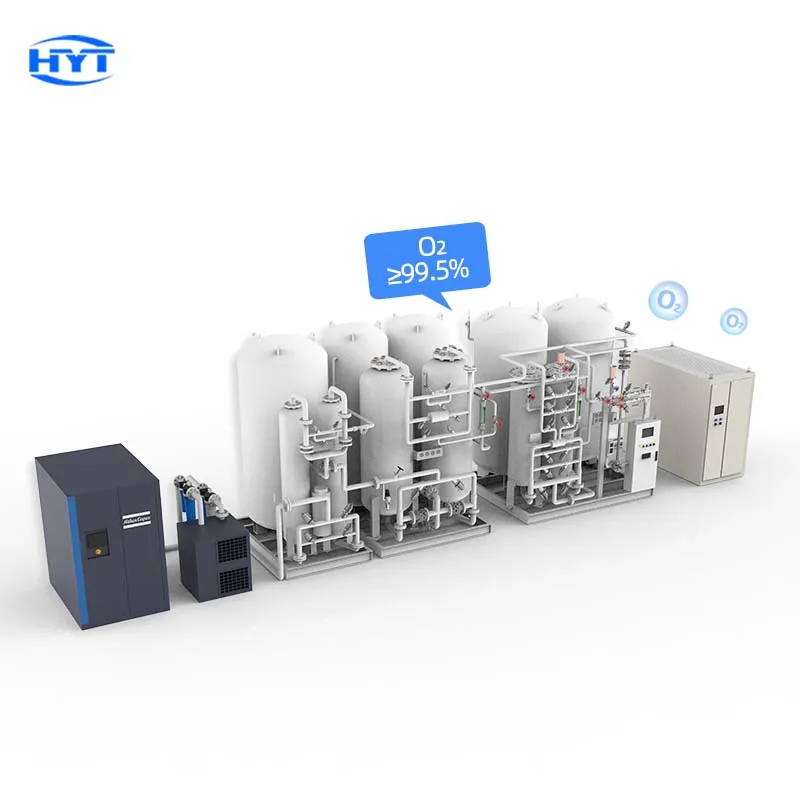
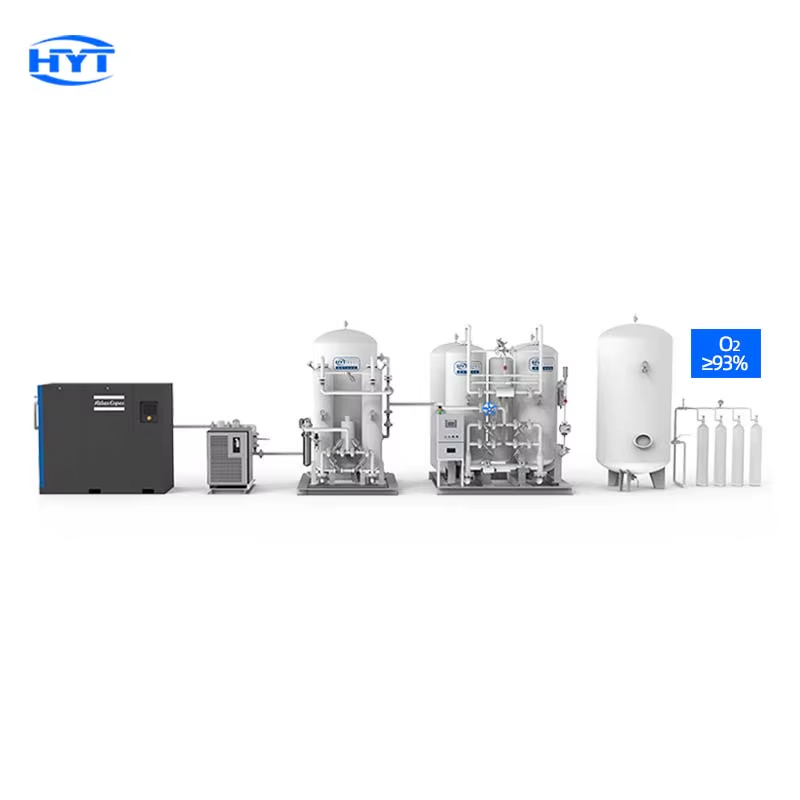
PSA oxygen generators typically operate at 0.2–0.4 MPa. Regular output purity is 90%–95%, with medical standard around 93% ± 3%. Special high-grade models can reach up to 99.5% purity, but the overall purity adjustment range is relatively limited.
Distinct Industrial Applications
Nitrogen is an inert protective gas. PSA nitrogen generators are used for electronics welding and chip production anti-oxidation protection, food packaging inert filling, chemical tank blanketing, and pharmaceutical production environment protection.
Oxygen supports oxidation and combustion. PSA oxygen generators are used for clinical and hospital medical oxygen supply, industrial oxygen-enriched combustion and metal processing, wastewater aeration treatment, and aerospace auxiliary oxygen support.
Final Takeaway
PSA nitrogen generators and PSA oxygen generators may look like twins from the outside, but they are not replaceable devices. Correct selection depends on the target product gas, required purity, flow rate, pressure and working-site application. Wrong selection or forced modification can result in low-quality gas output, shortened adsorbent service life and unexpected safety risks. Actual parameters vary by manufacturer, model and industry standard, so professional evaluation is recommended.
 Hot News
2026-09-24
2026-08-11
2026-08-07
2025-12-01
2025-11-18
2025-10-27

Welcome to HYT, we are the supplier of supplying PSA oxygen generator,nitrogen generator,99.5% oxygen plant,CO2 recycle machine for more than 30 years.
Room 4, Building A-35, Huading Mold Industrial Park, Hannan District, Wuhan, China
Copyright © Wuhan Hengyetong Gas Equipment Co.,Ltd. All Rights Reserved- Privacy Policy- Blog

 EN
EN