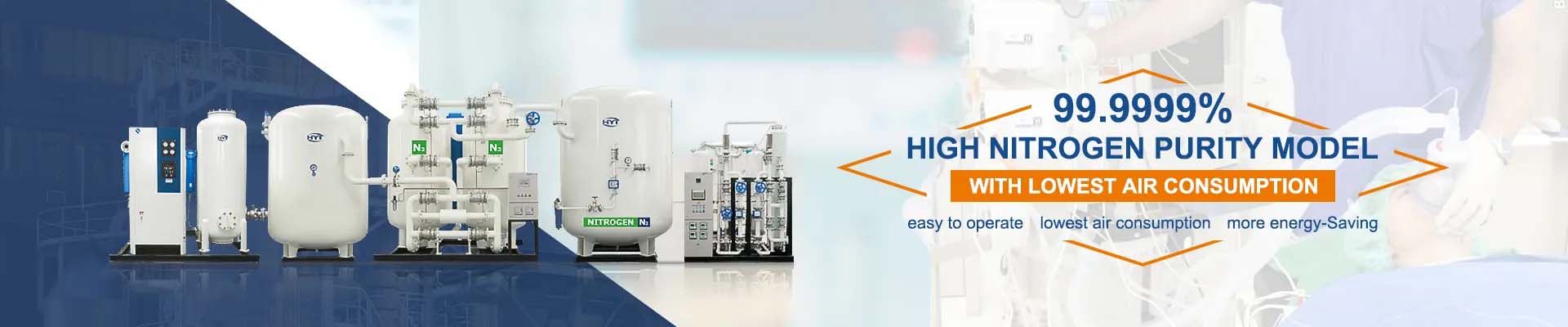
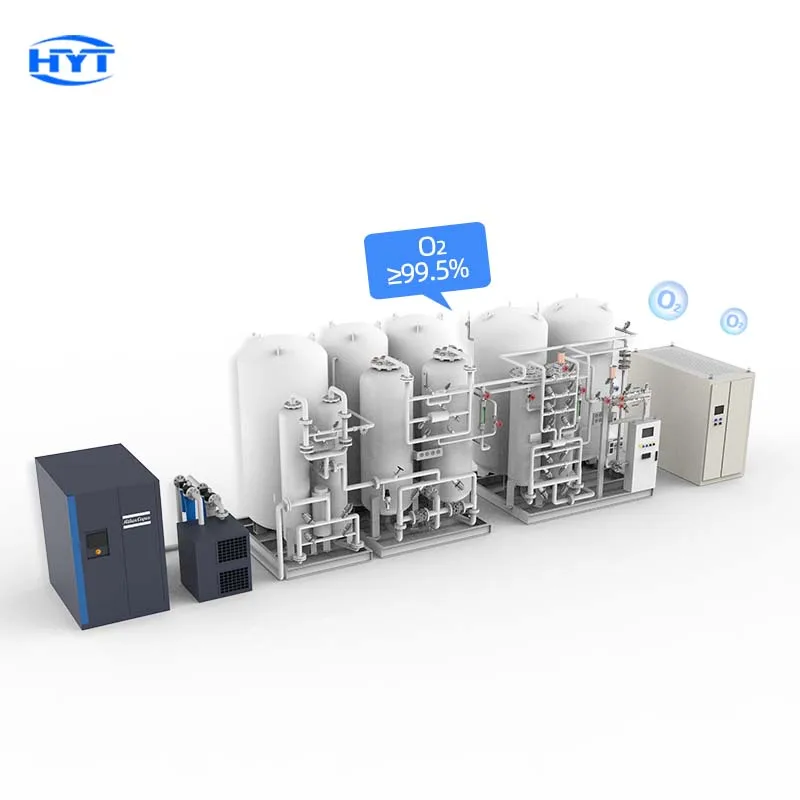
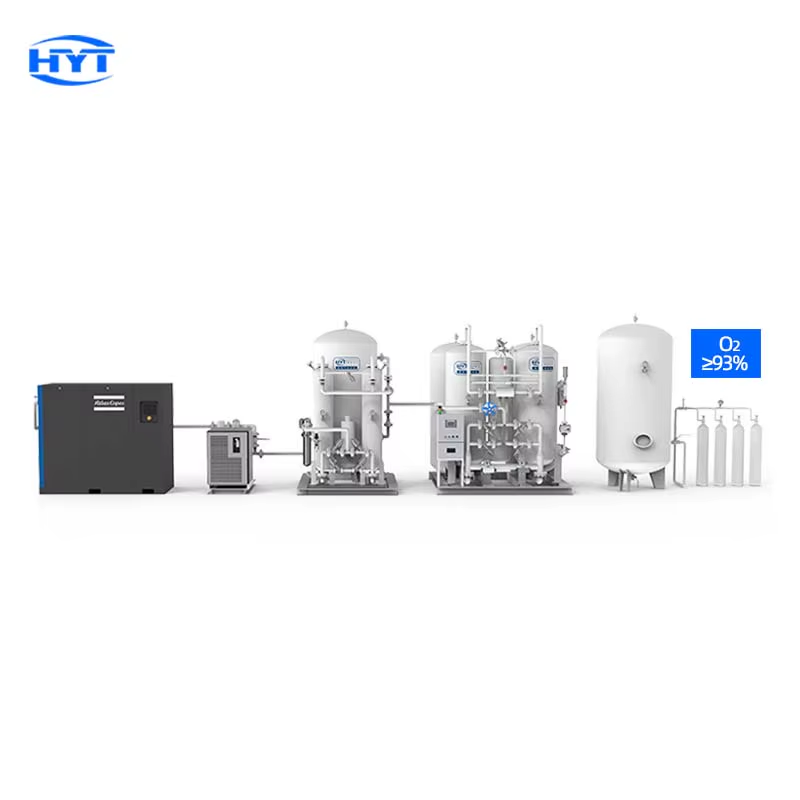
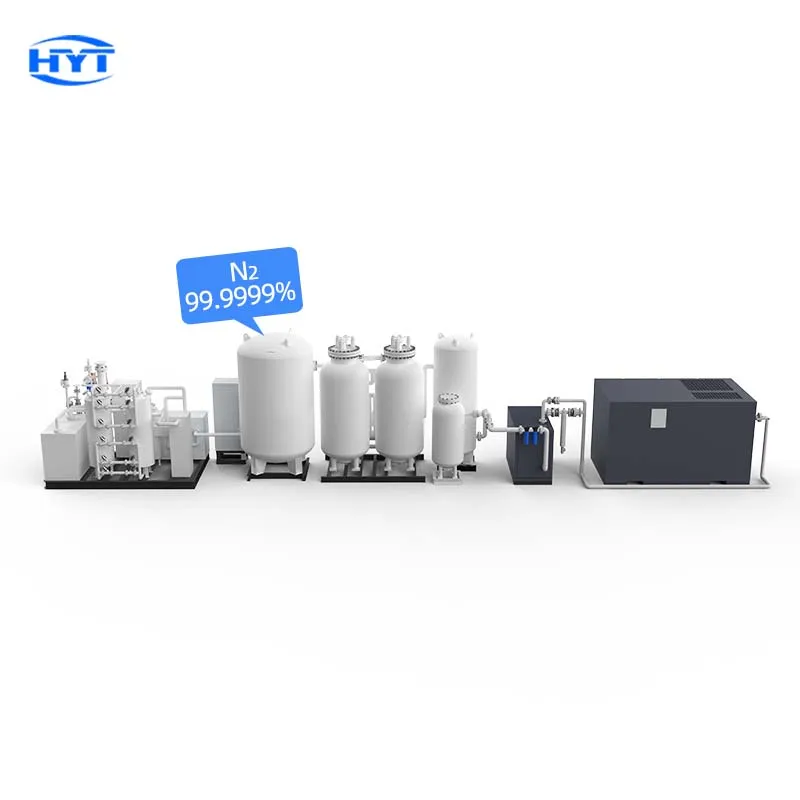
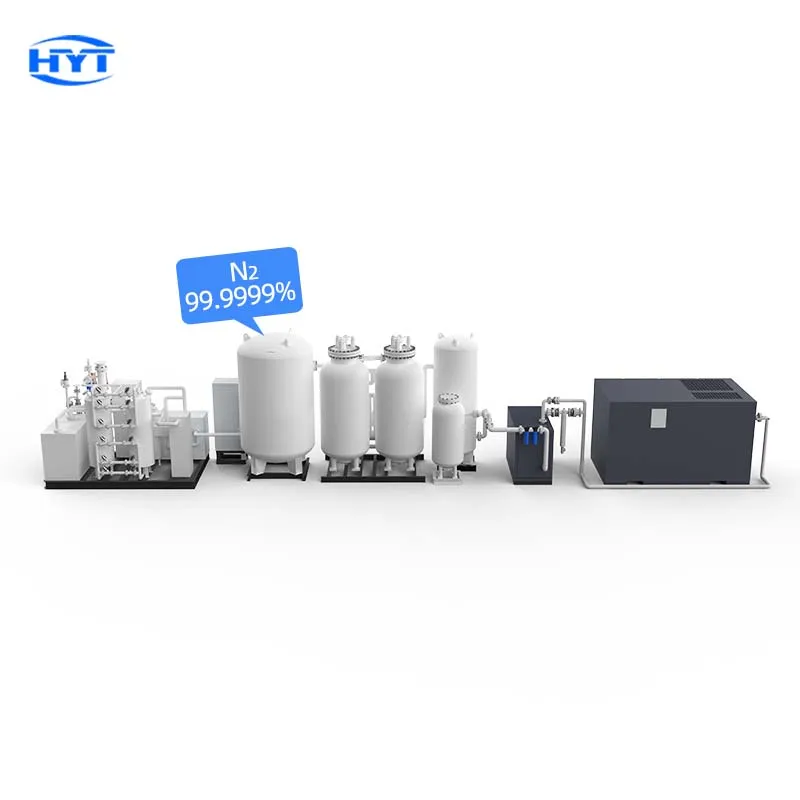
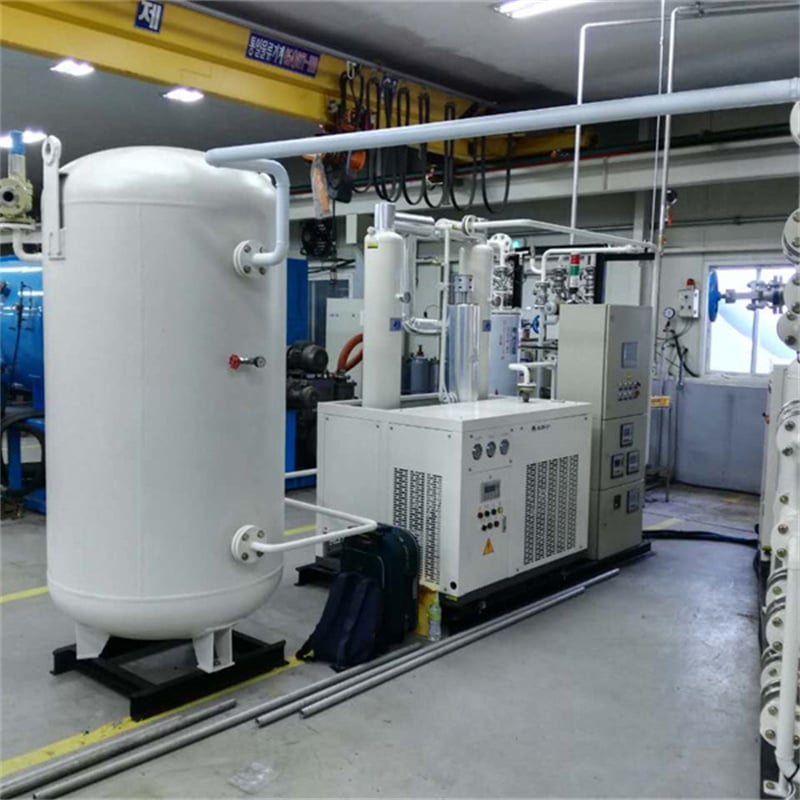
Many industrial operators overlook a critical detail when calculating operational costs for PSA (Pressure Swing Adsorption) nitrogen generators: the core nitrogen production unit barely consumes electricity. The real power drain stems from the front-end air compression and purification pretreatment system. This article breaks down the real-world annual power consumption of a full nitrogen generation system based on standard industrial operating conditions, delivering accurate cost references for manufacturing enterprises.
Core Working Principle of PSA Nitrogen Generators
PSA nitrogen separation relies on the differential adsorption rates of carbon molecular sieves for nitrogen and oxygen molecules in ambient air. By automatic valve switching, the system separates nitrogen from oxygen, water vapor and airborne impurities. Notably, the main nitrogen generator unit contains no high-power motors, heating components or high-pressure working parts. Its only operational components are PLC control systems, electromagnetic directional valves, pressure sensors and other low-power auxiliary parts, making its power consumption nearly negligible in industrial system energy budgets.
Standard Test Operating Conditions
To ensure accurate and industry-aligned energy data, all calculations are based on fixed standard industrial conditions: 100Nm³/h nitrogen output flow, 99.99% nitrogen purity, -60℃ finished gas dew point, 0.6MPa nitrogen outlet pressure, 20℃ ambient temperature, 200m altitude, 4.0 air-to-nitrogen ratio, with cooling water pump energy consumption excluded.
Energy Consumption Breakdown of the Full System
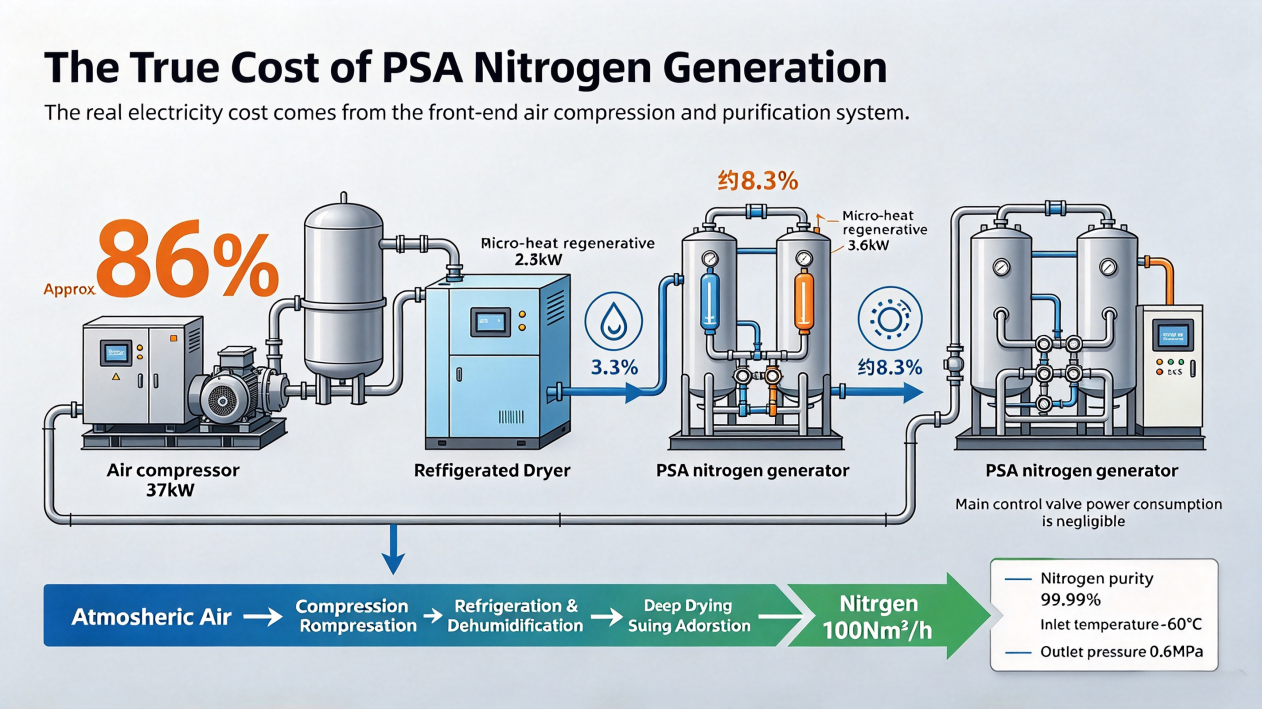
1. Air Compressor (86% of Total Power Consumption)
Atmospheric air cannot be directly processed by nitrogen generators. Air compressors are required to compress ambient air to 0.7–0.8MPa to provide stable raw gas for nitrogen production. For the above standard working conditions, a 37kW air compressor is matched, accounting for 86% of the system's total power consumption — the absolute primary energy-consuming component of the entire system.
2. Refrigerated Air Dryer (5.3% of Total Power Consumption)
As a primary purification device, the refrigerated dryer removes liquid water and large-particle water vapor from compressed air, reduces air humidity in advance, and significantly lowers the operating load of the downstream adsorption dryer. The matched power consumption of this equipment is 2.3kW, occupying 5.3% of the total system energy use.
3. Micro-thermal Adsorption Dryer (8.3% of Total Power Consumption)
The micro-thermal adsorption dryer's energy consumption does not come from continuous operation but periodic regeneration heating. Regular heating, pressure relief and purging are essential to remove deep water vapor adsorbed by molecular sieves, maintain the ultra-low -60℃ dew point standard, and protect the service life and working efficiency of the carbon molecular sieves in the nitrogen generator. Its matched power consumption is 3.6kW, accounting for 8.3% of total system energy use.
It is worth noting that a refrigerated dryer alone cannot meet the -60℃ deep dew point requirement for high-purity nitrogen production, making an adsorption dryer an indispensable core purification device for high-standard working conditions.
Hidden Factors Affecting System Energy Consumption
1. Altitude Impact
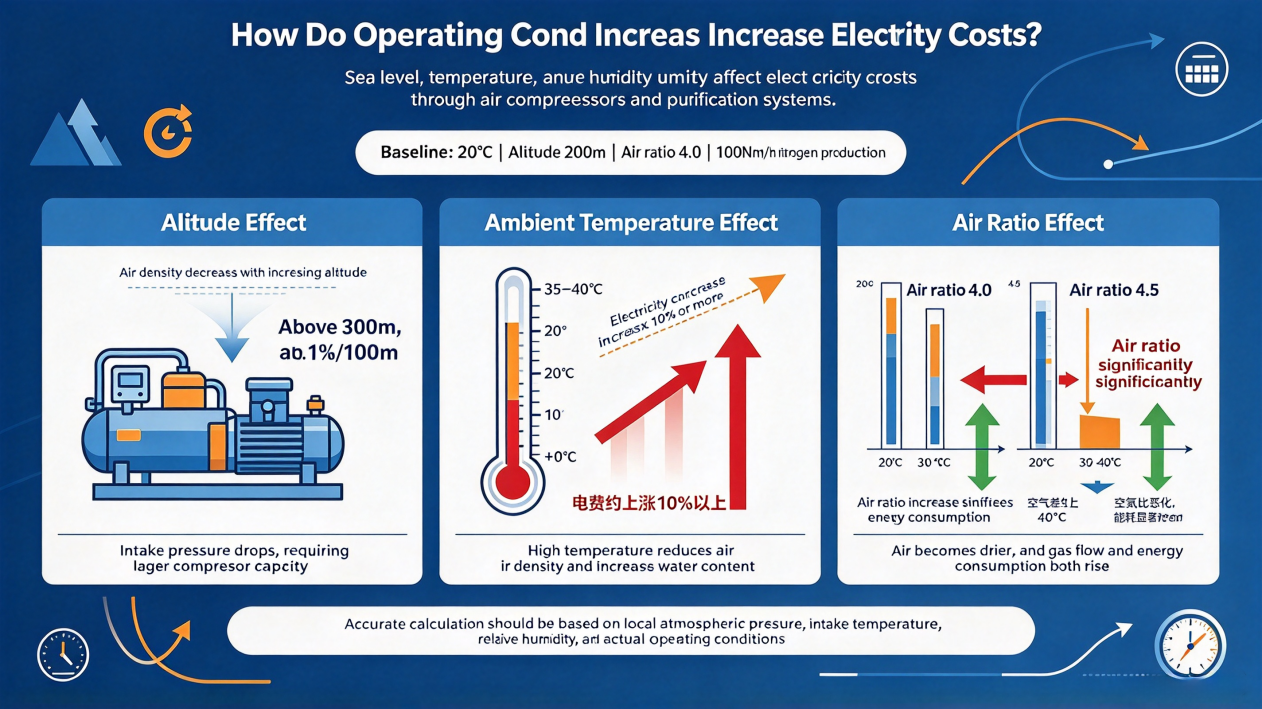
The standard calculation adopts a 200m altitude with minimal air density attenuation, and conventional equipment margin design compensates for minor intake air losses. For working environments above 300m altitude, every 100m increase in altitude causes a 1% loss of air intake, requiring extra power output to compensate and raising overall electricity costs.
2. Ambient Temperature Fluctuation
20℃ is the optimal design temperature for nitrogen generation equipment, featuring high air density and stable humidity to maintain standard energy consumption. If the workshop temperature rises to 35–40℃, air density decreases and air water content surges, directly increasing the system's overall power consumption by more than 10%.
3. Air-to-nitrogen Ratio Discrepancy
The standard calculation is based on a 4.0 air-to-nitrogen ratio. Any deviation from this optimal ratio will lead to a substantial increase in energy consumption, forming a noticeable cost gap in long-term operation.
Key Takeaway
For industrial enterprises using PSA nitrogen generation systems, optimizing energy efficiency and cutting electricity costs should focus on upgrading and adjusting air compressors and pretreatment purification equipment, rather than the low-power nitrogen generator host. Altitude, ambient temperature and air-to-nitrogen ratio are also key variables that cannot be ignored in daily energy cost control.
 Hot News
2026-09-24
2026-08-11
2026-08-07
2025-12-01
2025-11-18
2025-10-27

Welcome to HYT, we are the supplier of supplying PSA oxygen generator,nitrogen generator,99.5% oxygen plant,CO2 recycle machine for more than 30 years.
Room 4, Building A-35, Huading Mold Industrial Park, Hannan District, Wuhan, China
Copyright © Wuhan Hengyetong Gas Equipment Co.,Ltd. All Rights Reserved- Privacy Policy- Blog

 EN